
It’s late July or August, the sun feels like it’s sitting directly on top of your boat, and the shallow bite that carried you through spring and early summer suddenly disappears. The bank looks perfect, but your favorite laydowns, docks, and weed edges seem lifeless. Meanwhile, the lake is crowded with pleasure boaters, jet skis, and anglers all beating the shoreline to death. That’s when it’s time to go deep.
Most northeast anglers seem intimidated by the abyss, but it just takes some adjustments to figure out the bite.
The “dog days” of summer force bass to change their behavior. Oxygen levels, water temperature, forage movement, fishing pressure, and sunlight all push fish offshore. Anglers who understand how to target deep bass during the hottest months of the year can experience some of the most consistent and rewarding fishing of the season. And today’s advancements in technology make targeting and homing in on these summer bass just a little bit easier.
Why Bass Move Deep
The biggest reason both largemouth and smallmouth bass move offshore in summer is stability. Shallow water fluctuates constantly during summer. Water temperatures can soar into the upper 80s, oxygen levels can drop, and boat traffic creates nonstop disturbance. Deep water provides bass with cooler temperatures, more stable oxygen, and access to large schools of baitfish.
But “deep” is relative depending upon where you are in the northeast. On a natural glacial kettle hole, deep might mean 12 to 20 feet. On the Great Lakes, Finger Lakes, Champlain, Winnipesaukee or many others, bass may live in 30 to 60 feet all summer long. The key is finding the depth where bass are comfortable and where food is concentrated.
Many anglers make the mistake of assuming bass are randomly scattered offshore. In some cases, they are, especially when the bait is present. But deep bass are often grouped tighter than shallow fish. When you find one, there are usually more nearby.
Offshore Structure Is Everything
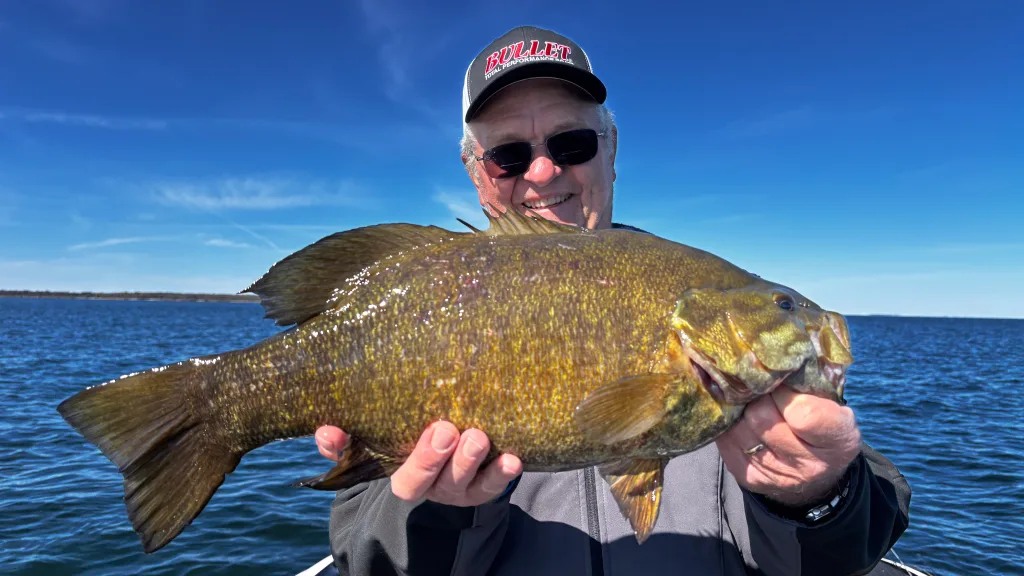
Deep summer bass are mostly structure-oriented fish. They don’t just suspend aimlessly in the middle of nowhere. They use underwater features as highways, feeding stations, and resting areas. Some of the best summer structure includes:
- Main lake points
- Offshore humps
- River channel bends
- Ledges
- Rock piles
- Deep weed edges
- Saddles between islands
- Sand rolls (like on the beach)
The common denominator is access to deep water and nearby food sources. One of the biggest breakthroughs for many bass anglers is realizing that offshore fishing is often more about electronics than casting. You can spend hours blind casting deep water with little success. But if you idle around and find bait, hard bottom, or schools of bass on sonar, your odds dramatically increase.
Electronics Matter More Than Ever
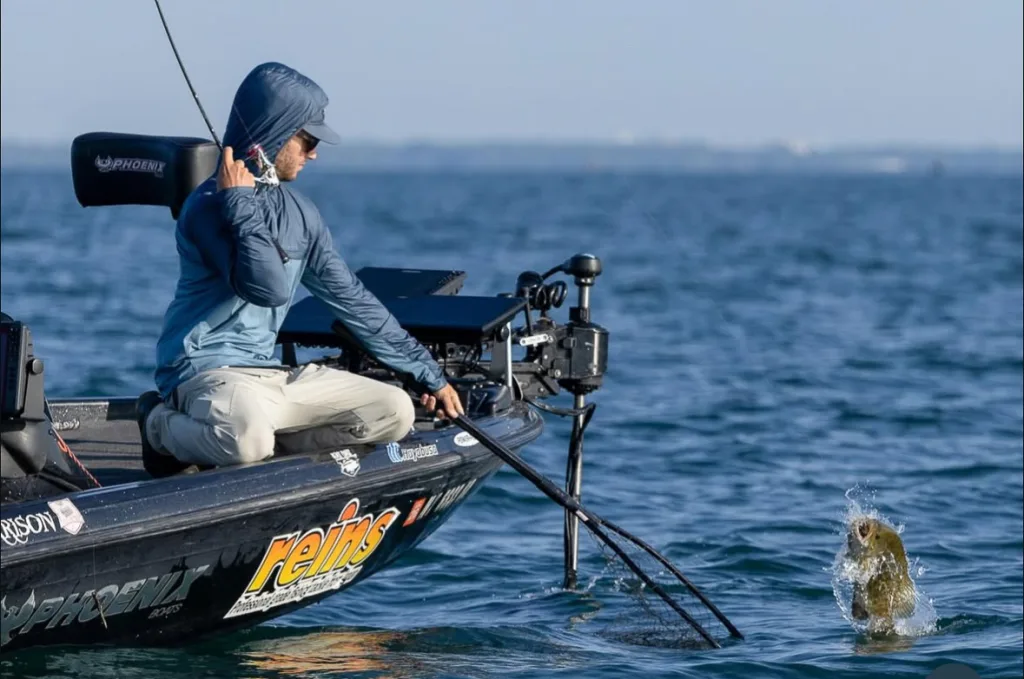
Modern electronics have changed offshore fishing forever. Even without forward-facing sonar, traditional 2D sonar and side imaging are incredibly effective tools for locating summer bass. Look for bait schools, bottom transitions, brush piles, or arcs relating to structure. I run split screens simultaneously on both of my Garmin graphs when I’m scanning for structure. This way I won’t miss anything when running side imaging, down imaging, GPS, and traditional 2D sonar.
One thing many anglers overlook is the importance of finding “sweet spots” on larger structures. A long point may hold bass on one small hard spot or tiny rock pile, and that key area might only be the size of a pickup truck. Pay attention to irregularities, such as:
- Hard-to-soft bottom transitions
- Isolated cover or boulders
- Small depth changes
- Bait concentration
- Current or tidal flow
These subtle differences can separate an average spot from a great one. And once you find the spot within a spot, it can be the difference in a few small fish or a 25-pound bag. To all of my northeast saltwater anglers out there, I relate this to targeting blackfish in the fall. Structure-oriented fish— whether it’s a bulldog blackfish or a jumbo bronzeback—sit on a spot within a spot.
Timing Offshore Fish
Deep bass are notorious for feeding in windows. You may graph fish for hours without getting bit, then suddenly catch several in a matter of minutes. Current, cloud cover, wind, or changing light conditions can trigger feeding activity quickly. Timing is everything.
Early morning and evening can still be productive offshore, but many deep fish actually feed best during the middle of the day when sunlight positions them tight to structure. That’s another reason patience matters. Offshore fishing is often slower and more methodical than shallow power fishing, but the quality of fish can be exceptional.
Top Presentations for Summer Bass in Deep Water
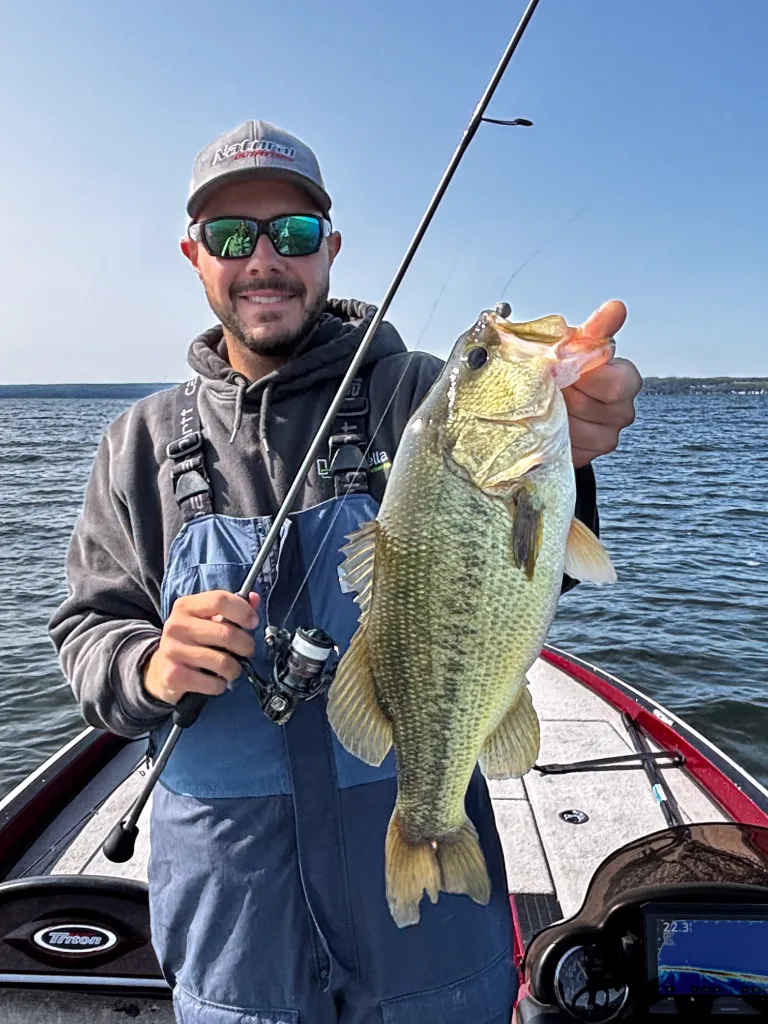
Football Jigs
Few lures catch deep summer bass more consistently than a football jig. Dragging a jig across rock imitates crayfish and allows anglers to maintain bottom contact. Summer bass tend to prefer slower presentations, especially during periods of high heat and bright skies.
Natural colors like green pumpkin, brown, or peanut butter and jelly excel in clear water, while darker colors shine in stained conditions. The key is keeping in contact with the bottom. Offshore bites can feel subtle—sometimes just extra weight or a mushy sensation. Remember, hooksets are free and if you feel anything different, swing for the fences!
I am a huge fan of the T’s Tackle Football Jig, paired with either a Berkley Lil’ General or a Net Bait Paca Chunk. The Ned-style trailer works great when bass are keyed into something goby or perch-like, while the craw trailer works well when crayfish are present.
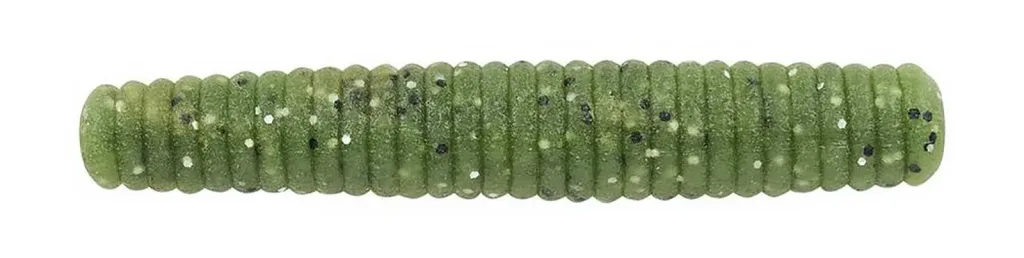
Big Worms
Large ribbon-tail worms become legendary during the dog days, especially for largemouth. Summer is when oversized profiles, like a big worm, produce bigger bites. A 10-inch worm looks like an easy meal to a bass trying to conserve energy in warm water. Texas-rigged worms excel around brush piles, ledges, submerged trees, deep vegetation and even large rock.
Many anglers fish worms too fast offshore. Slow dragging and occasional pauses are usually more effective than aggressive hopping. The more aggressively you fish the worm, the fewer bites you’ll get.
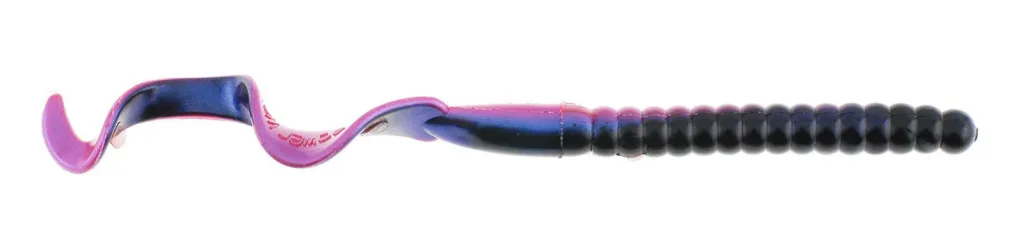
The Berkley Power Worm in both the 7- and 10-inch sizes are proven ribbon-tailed baits that I always keep in the boat. Whether rigged with a bullet sinker, split shot, or Carolina rig, a ribbon tail worm produces quite a few bites when the water is warm.
Deep Crankbaits
Deep-diving crankbaits allow anglers to cover water quickly and trigger reaction strikes from offshore schools of bass. Cranking can be physically exhausting, but it’s one of the best ways to locate active bass. Deflecting a big-lipped crankbait off rock or shell bottom often triggers vicious strikes from both species of bass. Long casts are critical for getting the bait down to the desired depth. The longer a crankbait stays in the strike zone, the more effective it is.

There are so many deep-diving crankbaits on the market, but the two that produce the most bites for me are a Rapala DT-20 and a Norman DD22. These baits have incredible action and come with sturdy hardware to keep fish pinned.
Moping
When bass become pressured or inactive, finesse tactics dominate—especially hanging a “minner” over their head. Minnow shaking has exploded in recent years with forward-facing sonar, and for good reason. It catches a lot of fish, and big ones too. Shaking the minnow in front of a bass’ face will trigger a bite when other baits fail. The ability to hang a soft plastic in front of them with little to no movement drives bass insane. As boring as it might be to look at a screen all day, it generates strikes from fish that wouldn’t normally eat.
There’s a pile of minnow baits on the market, but my favorites are a Rapala Crush City Freeloader or Mooch Minnow paired with a Northland Smeltinator jighead. I keep this combo rigged on a few different rods to find the right presentation. Some days the fish want heavier weights and sometimes, smaller baits excel. Keeping a variety of minnow rods on deck and ready to roll can be the difference in how many bites you get in a day.

Don’t Ignore Deep Grass
Not all offshore fishing revolves around rock and ledges. In many natural lakes, deep weed edges are summer gold mines. Healthy green vegetation provides oxygen, shade, and ambush cover.
Milfoil, cabbage, coontail, and hydrilla edges will hold schools of bluegill, perch, and baitfish, which naturally attract bass. However, even with a lot of vegetation present, that doesn’t mean that all of it will hold fish. Find the greenest vegetation possible—those plants give off more oxygen. Healthy vegetation equals nutrient-rich water, which attracts a lot of big, hungry bass.
Mental Discipline Offshore
Deep fishing frustrates many anglers because it feels less visual and less exciting than shallow fishing. Instead of skipping docks or watching explosive topwater strikes, you’re staring at electronics, dragging baits, and fishing spots that may appear featureless on the surface.
But offshore fishing rewards discipline. Many anglers abandon deep water too quickly. The best offshore fishermen trust their electronics, understand seasonal movement, and thoroughly pick apart productive structure. Sometimes, one offshore school can completely change the outcome of the day.
The Reward of Summer Offshore Fishing
The dog days of summer separate casual bass fishermen from anglers willing to adapt. While most boats crowd shallow banks and complain about tough fishing, offshore anglers quietly target bass that are often less pressured and more tightly grouped.
Deep fishing may not always be glamorous, but it consistently produces. When the summer heat gets brutal and shallow fishing dies, don’t panic. Get behind the screens, idle around offshore, and start looking deeper.
READ MORE